
How cryptographically verified copyright evaluations transform ROI across the internet
The Internet Music Evaluation System creates more than marketing intelligence for individual artists. Each evaluation generates verifiable data that flows through financial markets, legal proceedings, and commercial negotiations.


Loading...
Verify on BlockchainUnderstanding these applications reveals how copyright evaluation transforms from casual inquiry into measurable economic value.
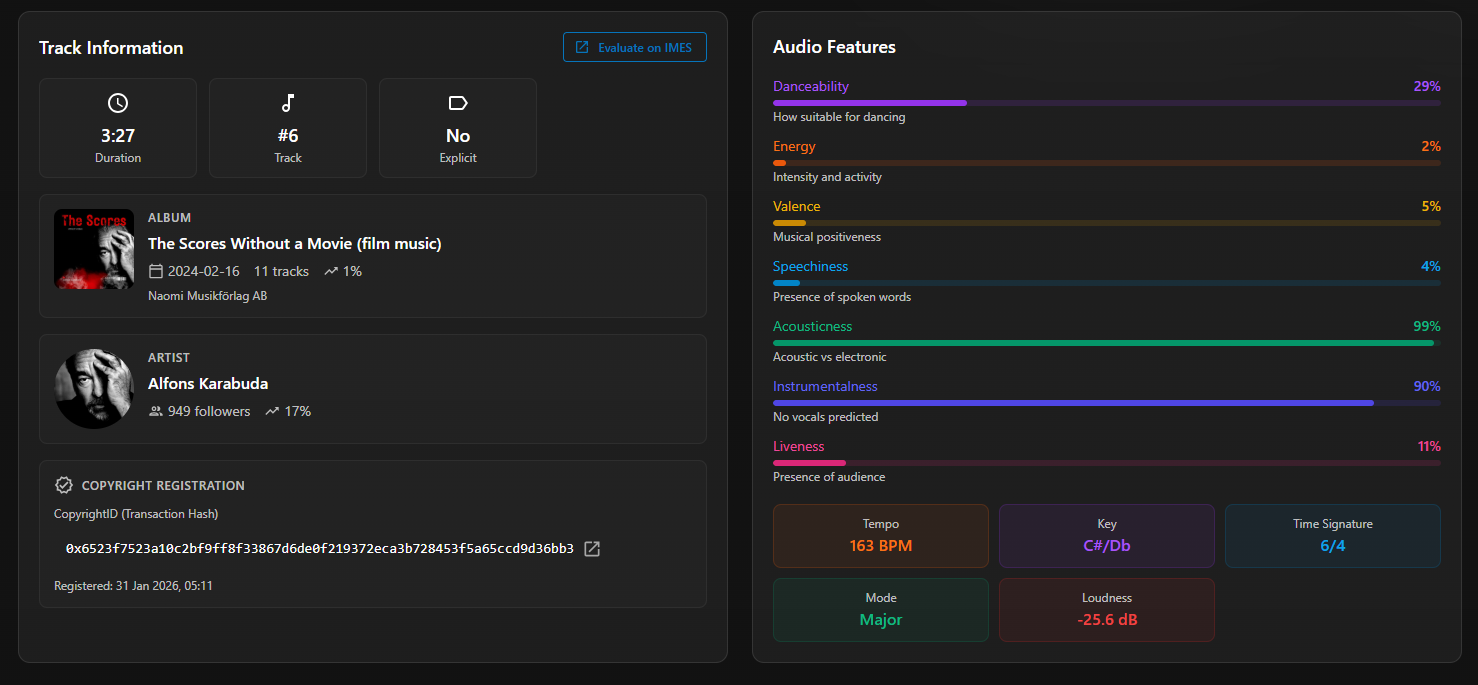
The data advantage
Traditional copyright valuation relies on historical streaming revenue and subjective assessment.
Evaluation data provides leading indicators: what people want to know about a work before they license it, invest in it, or build commercial relationships around it.
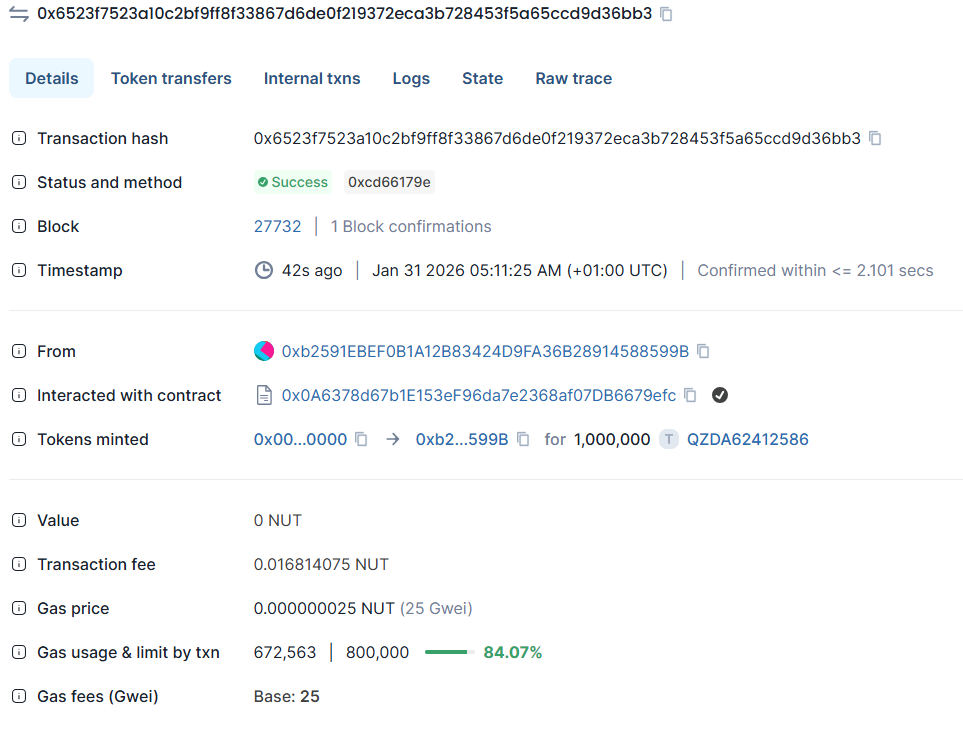
The cryptographic verification matters because financial institutions, courts, and investment funds require independently verifiable data. Streaming platforms control their own metrics. Evaluation data exists on immutable infrastructure that any party can verify through public explorers. This independence creates trust across transactions where parties have competing interests.
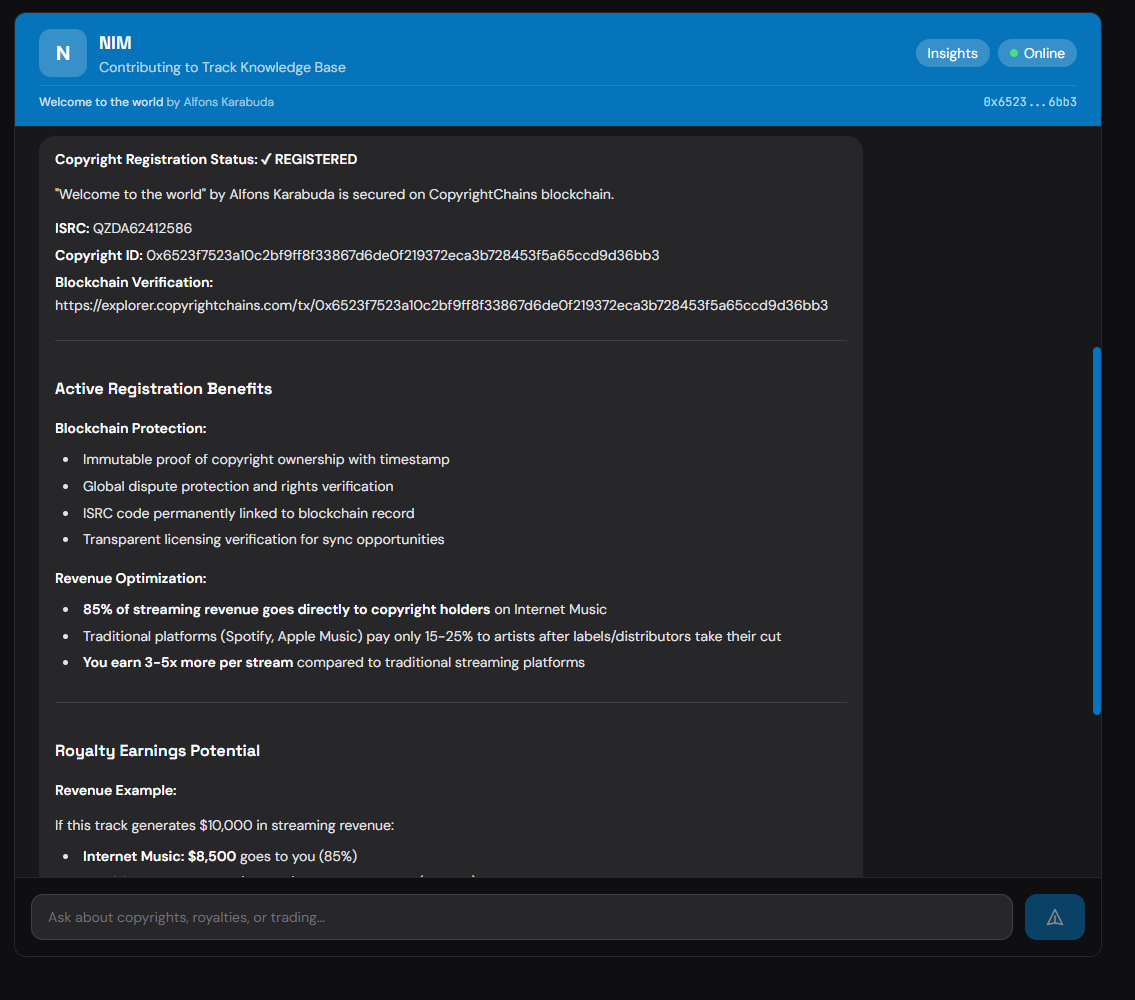
Financial structuring applications.
Portfolio valuation transforms negotiations
A music publisher evaluating catalog acquisition faces valuation uncertainty beyond current streaming performance. Evaluation histories change this equation. A catalog showing 2,400 total evaluations across 150 tracks provides quantifiable engagement data. High-interest tracks receiving 40+ evaluations each, with 65 percent of questions focusing on licensing terms, demonstrate market validation beyond current monetization.
This shifts negotiation from subjective assessment to objective measurement. The cryptographic verification enables both parties to trust the data without relying on potentially biased self-reporting.
Series LLC structuring gains precision
Wyoming's Series LLC structure enables treating individual copyrights as separate financial entities. Evaluation data solves the valuation challenge efficiently. An artist registering 12 tracks as separate series demonstrates Track A with 89 evaluations showing strong licensing interest deserves different capitalization than Track B with 12 evaluations focused on technical questions.
High-interest works secure favorable financing terms based on demonstrated engagement. Emerging works maintain flexibility without dragging down portfolio valuations. Each copyright operates as a distinct asset with measurable market validation.
Copyright-backed lending becomes viable
Financial institutions historically avoided copyright-secured lending due to valuation uncertainty. Evaluation data provides risk assessment metrics independent of platform control. Works showing consistent evaluation growth and licensing-focused inquiries demonstrate market validation beyond current revenue.
Reduced risk assessment costs lower interest rates for borrowers. Expanded addressable market increases opportunity for lenders. Verifiable engagement data creates the foundation for standardized copyright lending products currently impossible with existing data sources.
Licensing intelligence multipliers.
Opportunity identification moves from reactive to anticipatory
Sync licensing traditionally operates reactively. Evaluation data enables anticipatory strategy. A sync agency monitoring evaluation patterns identifies tracks showing sudden spikes or licensing-question concentration. Proactive outreach occurs before competitors recognize emerging trends.
Early positioning captures opportunities 3-6 months ahead of reactive approaches, increasing placement success rates and negotiating leverage.
Geographic expansion gains validation
When 40 percent of evaluations for a Sweden-registered track ask about North American licensing terms, documented demand validates expansion investment before significant marketing spend. Geographic strategy shifts from speculation to response, reducing waste dramatically.
Rate justification strengthens through correlation
Tracks with evaluation counts above 50 consistently generate licensing inquiries at 3x the rate of lower-evaluation works. This documented correlation enables predictive modeling and supports premium rate justification through quantifiable market validation metrics.
Legal applications create defensive advantages
Infringement cases gain verified timelines
An artist discovering unauthorized use reviews IMES records showing 23 evaluations of the original work between specific dates. Three evaluations originated from IP addresses within the infringer's corporate network two months before the unauthorized use.
This evidence quality dramatically exceeds traditional documentation. Cryptographic verification prevents tampering claims. Independent verification through public explorers eliminates reliance on plaintiff-controlled records.
Expert testimony gains verifiable foundation
Evaluation data provides quantifiable evidence courts can independently verify. Expert testimony about market value gains foundation through documented interest patterns, professional inquiries, and commercial potential metrics. The cryptographic verification withstands technical scrutiny that undermines traditional expert opinion.
Marketing optimization through documented interest.
Audience targeting precision reduces waste
Evaluation topic distribution reveals actual interest areas. Track X showing 55 percent of evaluations focused on production techniques indicates production community interest. Track Y showing 70 percent focused on lyrical themes indicates literary audience affinity.
Marketing spend effectiveness increases 40-60 percent by targeting demonstrated interest areas rather than demographic speculation.
Release timing captures demand windows
A track scheduled for Q3 showing accelerating evaluation counts in Q1, with questions increasingly focused on availability, signals demand ahead of schedule. Advancing release to Q2 capitalizes on documented interest rather than adhering to arbitrary timelines.
Revenue acceleration compounds through multiple mechanisms. First-week performance improves by capturing peak interest windows. Marketing spend efficiency increases through alignment with organic demand.
Collaboration decisions gain validation
Two artists discovering through evaluation data that their separate registered works receive similar evaluation patterns and topic clusters gain quantifiable market validation for collaboration potential. Documented audience overlap reduces commercial risk while increasing cross-promotion efficiency.
Portfolio management becomes data-driven
Investment prioritization concentrates resources
A catalog owner with 500 registered works identifies 30 tracks showing strong evaluation growth and licensing interest but outdated production quality. Strategic remastering investment focuses on these works rather than evenly distributing resources.
Concentrated investment on data-validated opportunities generates 5-8x return compared to broad-based improvements.
Emerging value recognition enables early positioning
A track showing minimal initial evaluation activity suddenly demonstrates exponential evaluation growth following minor streaming playlist placement. Portfolio manager recognizes emerging value early and prioritizes promotional investment ahead of broader market recognition.
Early identification enables strategic positioning before market saturation, maximizing growth capture during momentum phases.
Cross-platform intelligence reveals dynamics.
Platform performance correlation informs strategy
Comparing evaluation data with platform performance reveals correlations. High evaluation counts correlate with strong performance on platforms emphasizing discovery and curation. Low evaluation counts correlate with platforms emphasizing algorithmic recommendation.
Platform-optimized marketing increases streaming performance 25-40 percent by aligning promotional efforts with platform dynamics revealed through evaluation patterns.
International market opportunities gain validation
A Swedish artist discovering 35 percent of evaluations originate from Japan, with questions focused on physical media availability, gains concrete validation for Japanese market expansion. International expansion success rates improve 3-4x compared to speculative approaches.
Investment applications create market efficiency
Copyright investment funds gain data advantage
Funds using evaluation data as primary due diligence metric gain information advantage. Portfolio construction prioritizes works showing consistent evaluation growth, diverse topic engagement, and commercial question concentration. Fund performance outperforms streaming-data-only approaches by capturing early value recognition.
Securitization vehicles gain credit enhancement
Securitization vehicles packaging copyright assets use evaluation data as credit enhancement. Rating agencies accept cryptographically verified evaluation data as supporting documentation for creditworthiness assessment, potentially improving credit ratings and lowering cost of capital for rights holders.
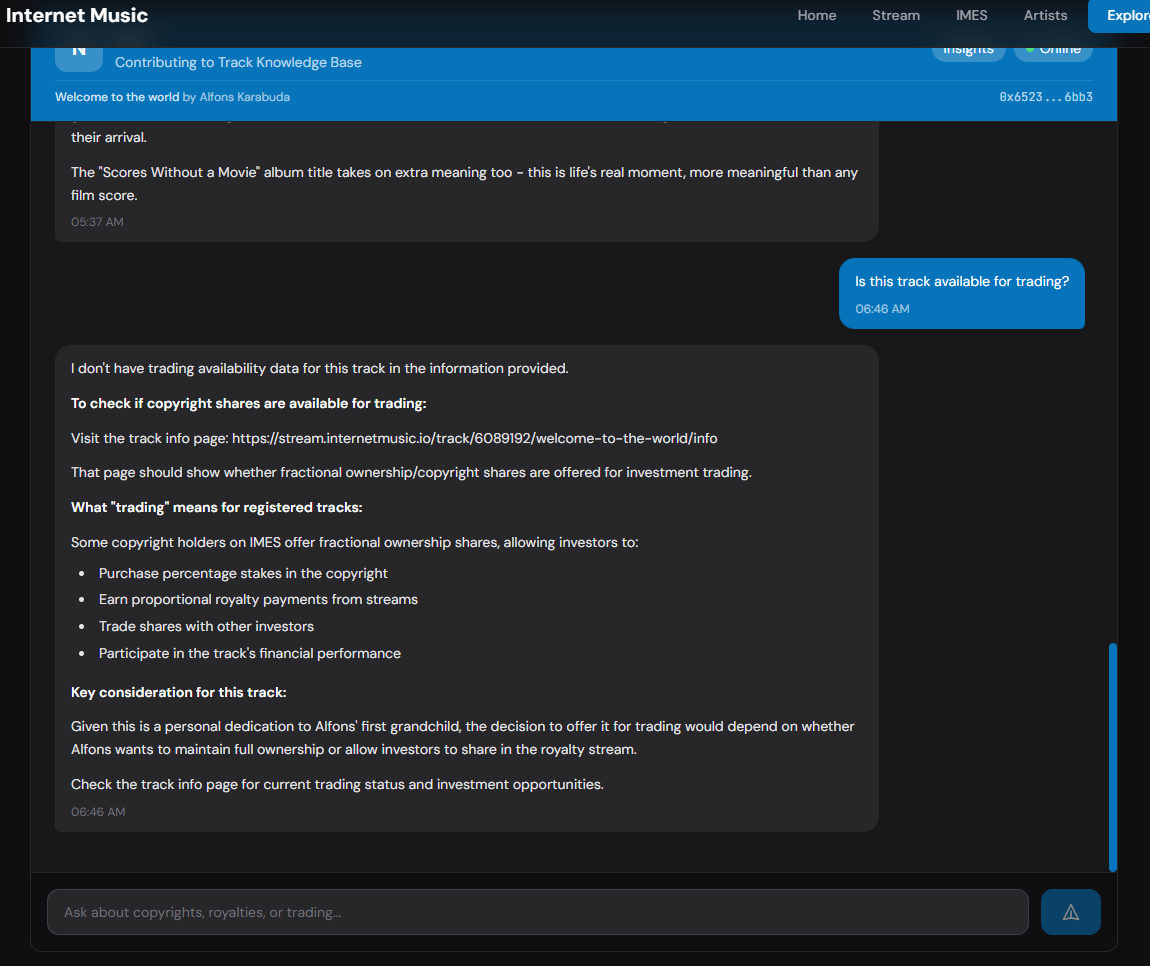
The compounding advantage
These scenarios demonstrate value multiplication across levels. Individual copyrights gain marketing optimization and legal protection. Portfolios benefit from improved investment allocation. Markets achieve better pricing efficiency. The industry develops improved understanding of copyright economics.
Each registered copyright becomes a data-generating asset beyond its creative and commercial value. The cryptographically verified nature ensures cross-party trust in evaluation data, enabling applications from litigation to securitization that require independent verification.
The competitive advantage accrues to rights holders who register early and accumulate evaluation histories. Like compound interest, early data accumulation creates advantages that grow over time. The tenth evaluation benefits from context provided by previous nine. The hundredth evaluation draws on rich knowledge base built over months or years.
This positions registered copyright holders to capture value from AI and data-driven decision-making rather than being displaced by it. Cryptographic verification transforms casual inquiries about music into measurable economic assets that flow through financial markets, legal proceedings, and commercial negotiations across the internet.