
Resilience and versatility in technological platforms
Introduction


Loading...
Verify on BlockchainIntroduction
Industries face multifaceted and unprecedented challenges in an era of rapid technological advancements and shifting economic paradigms. From evolving security threats in artificial intelligence (AI) applications — such as adversarial attacks and data poisoning — to managing creative content rights, including unauthorized use and royalty disputes. Robust and adaptive solutions have never been more pressing. Transformative technological platforms are emerging, integrating cutting-edge blockchain technology, advanced AI tools, and extensive industry networks to address these challenges effectively.
This article explores how such platforms are uniquely positioned to mitigate these emerging issues, fostering innovation and stability across the digital economy.
Modular and Scalable Framework
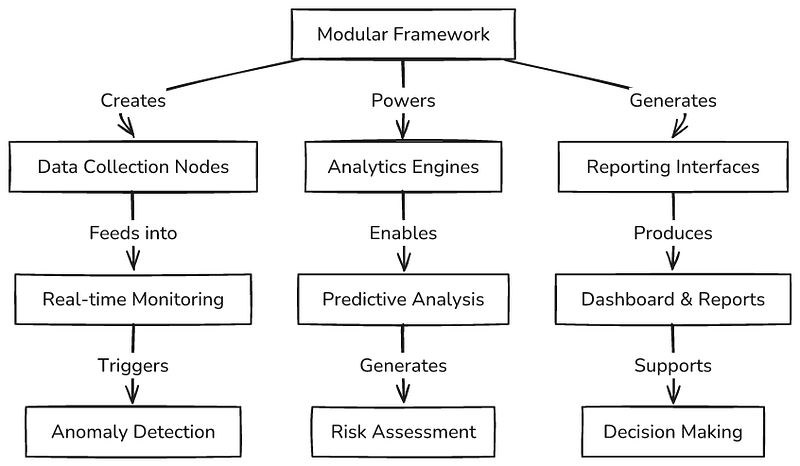
At the core of these platforms lies a modular architecture that offers unparalleled flexibility and scalability. This framework addresses diverse and evolving challenges by allowing components such as data collection nodes, analytics engines, and reporting interfaces to be scaled or customized based on specific industry needs. For example, in the music industry, analytics engines can process vast amounts of metadata generated by streaming platforms, enabling precise royalty calculations and efficient content discovery. This adaptability is particularly critical in dynamic environments like digital content management and AI-driven applications, where demands can shift rapidly due to market trends or technological advancements.
Proactive Monitoring and Predictive Analysis
These platforms leverage state-of-the-art monitoring tools and predictive analytics to anticipate and address potential challenges before they escalate. For instance, a major streaming service used predictive analytics to detect and mitigate server overload risks during a global event, ensuring uninterrupted service for millions of users and avoiding costly downtime. Through continuous monitoring and heuristic analysis, the system can identify anomalies, such as unusual traffic patterns or emerging faults in network infrastructure. Predictive modeling enhances this capability, enabling stakeholders to foresee and mitigate issues ranging from performance bottlenecks to security vulnerabilities. This proactive approach minimizes downtime while ensuring consistent delivery of high-quality services.
Seamless Interoperability and Integration
A defining strength of these platforms is their robust interoperability, which enables seamless integration with existing systems, tools, and devices. This adaptability ensures that new capabilities, such as enhanced security modules or advanced analytics platforms, can be incorporated without disrupting operations. By maintaining compatibility with a wide range of industry standards and protocols, the platform is a versatile solution capable of addressing complex, multi-layered challenges across domains like music rights management, financial systems, and digital security.
Advanced Automation and Orchestration
Automation serves as a cornerstone of the platform’s operational strategy. The system automates critical processes such as data collection, analysis, and reporting by employing machine learning algorithms and pre-defined workflows. This approach enhances operational efficiency and ensures rapid responses to evolving challenges. The platform automates copyright infringement detection in music rights management through AI-driven content recognition, streamlining rights enforcement, and royalty distribution.
Comprehensive Reporting and Transparency
Transparency and accountability are central to these platforms’ value propositions. For example, in the financial sector, real-time reporting tools have enabled institutions to comply with regulatory requirements while reducing audit process errors, significantly improving stakeholder trust. The system provides real-time dashboards and comprehensive reporting tools that deliver actionable insights. Whether addressing compliance requirements or optimizing operational performance, these tools ensure decision-makers have timely access to crucial data. Such visibility is invaluable in industries requiring strict regulatory adherence, such as finance and creative content management.
Addressing Industry-Specific Challenges
Copyright Management and Royalty Distribution
In the creative economy, these platforms tackle critical challenges such as ensuring transparency, preventing unauthorized use, and streamlining royalty distribution. By leveraging blockchain’s immutability and AI’s analytical power, they create robust ecosystems where content creators can manage their rights efficiently. Automated royalty calculations and payments, facilitated by smart contracts, reduce administrative overhead and eliminate intermediaries, significantly increasing payout efficiency.

Mitigating AI-Driven Risks
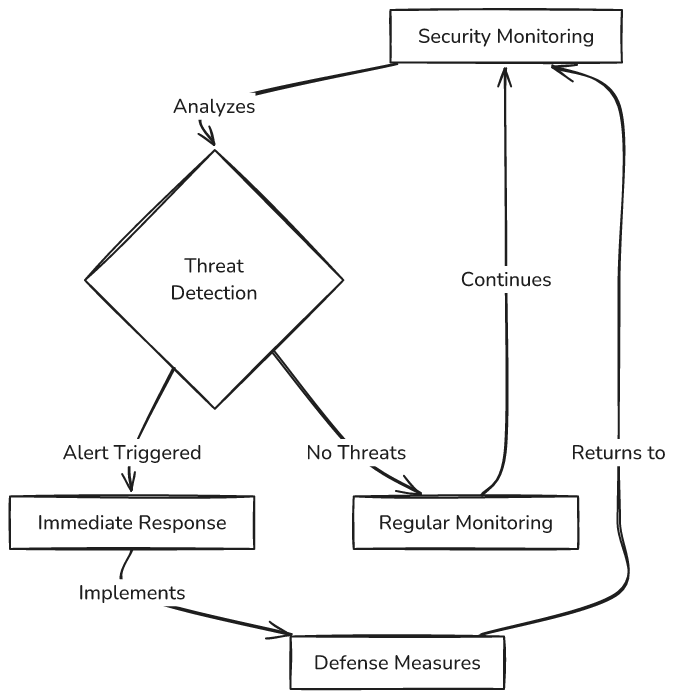
The rise of AI introduces new security and operational risks, including malicious uses such as AI-generated phishing schemes or deepfake fraud and systemic vulnerabilities like exploiting algorithmic biases in financial decision-making. These platforms combat such threats through advanced machine-learning models capable of identifying potential risks in real-time. Integrating these capabilities ensures that AI applications are effective and secure, addressing concerns around data poisoning, adversarial attacks, and system exploitation.
Financial Stability and Systemic Risk Management
The financial sector increasingly relies on AI for operational efficiency and risk management. However, this dependence amplifies systemic risks such as procyclicality and unknown-unknown scenarios. These platforms ‘ predictive modeling and data-driven insights create a robust foundation for mitigating such risks, ensuring financial stability in an ever-evolving landscape.
Summary
These technological platforms represent a paradigm shift in how industries address and overcome complex challenges. By combining modular scalability, advanced automation, and seamless interoperability, they deliver versatile and resilient solutions that adapt to diverse needs. Their proactive monitoring, comprehensive reporting, and focus on transparency further enhance their value, making them indispensable tools for sectors ranging from creative content management to financial systems. In a world where technological and economic landscapes are in constant flux, these platforms’ ability to integrate cutting-edge innovations with practical applications positions them as leaders in the digital economy.
They address today’s challenges through transformative capabilities while laying the groundwork for a more secure, efficient, and equitable future.


