
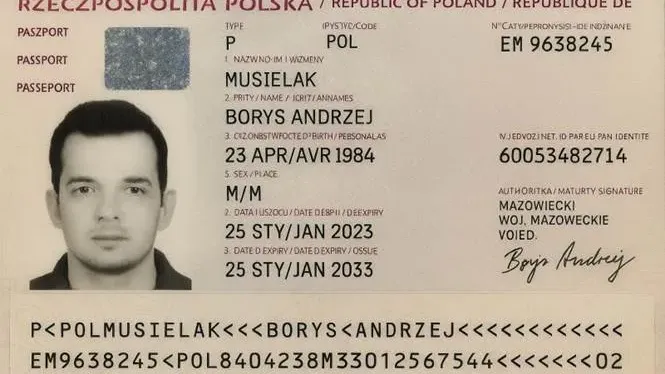
The $15 fake passport that broke the internet, with less money than your lunch order, to create a…
A Polish researcher just proved it, using ChatGPT-4o to generate documents that sailed through Revolut and Binance’s security checks. But…

Loading...
Verify on BlockchainThe $15 fake passport that broke the internet, with less money than your lunch order, to create a fake passport that fools major banks.
A Polish researcher just proved it, using ChatGPT-4o to generate documents that sailed through Revolut and Binance’s security checks. But that’s just the beginning of our nightmare.
Creating convincing fake content is now terrifyingly simple:
- Fake passports: $15, 5 minutes, zero expertise needed
- Deepfake videos: Free tools, one-click generation, grandma thinks it’s real news
- Fake news articles: AI writes 50,000+ monthly, each indistinguishable from real journalism
Remember when you could spot fake videos by counting fingers? Those days are gone. Google’s Veo 3 creates footage so realistic that a grandmother recently mistook Grand Theft Auto gameplay for actual news coverage. Now imagine what purpose-built deception tools can do.
The tools are everywhere: Underground platforms offer “Fraud-as-a-Service” packages. Upload a spreadsheet of names, and receive 1,000 fake IDs by dinner. Need a video of someone saying something they never said? Thirty seconds of audio and a photo is all it takes.
This isn’t science fiction. It’s happening now, at scale, for a fraction of the cost.
Traditional verification is dead. When AI can perfectly replicate security holograms, forge biometric data, and generate photo-realistic “evidence” of events that never happened, our old defenses are useless.
Because in a world where anyone can fake anything, we need technology that can tell the difference.
New Internet Media’s technology platform, particularly through its Copyright-as-a-Service framework and blockchain infrastructure, offers several innovative approaches to combat this type of fraud.
Blockchain-based identity verification framework
NIM’s CopyrightChains platform provides a foundation for creating tamper-proof identity verification systems. The platform’s private, permissioned blockchain network can establish immutable records of authentic identity documents, creating a verifiable chain of custody that distinguishes legitimate documents from AI-generated fakes. Each authentic identity document registered on CopyrightChains is assigned a unique identifier, recorded on the secure blockchain ledger, which provides cryptographically secure timestamps and detailed metadata regarding document authenticity.
The system ensures that all verification transactions are recorded immutably, creating a transparent and tamper-proof record guaranteed for 120 years. This approach significantly reduces the likelihood of fraudsters obscuring the origins of fake documents or manipulating verification records.
AI-powered detection and fingerprinting technology
NIM’s advanced AI detection capabilities can be adapted to identify AI-generated identity documents through sophisticated analysis techniques. The platform utilizes Natural Language Processing and contrastive learning models to generate content hashes and analyze the unique elements of documents with greater accuracy than traditional systems.
The AI-powered fingerprinting technology works by extracting distinctive features from authentic documents and creating unique, tamper-resistant identifiers. These fingerprints (aka CopyrightID) can detect subtle patterns characteristic of AI-generated content, including inconsistencies in typography, image compression artifacts, and metadata anomalies that typically distinguish synthetic documents from authentic ones.
NIM’s federated learning system can identify derivatives across multiple AI models, enabling the platform to recognize when documents have been generated using specific AI tools. The system’s spectral analysis capabilities can detect altered content and identify manipulation patterns that human reviewers might miss.
Proof of personhood and identity staking mechanisms
NIM’s innovative Proof of Content staking mechanism can be adapted for identity verification through a “Proof of Personhood” system. This approach requires individuals to stake NIM Utility Tokens on their identity verification, creating economic incentives for providing authentic documentation while discouraging fraudulent submissions.
The staking mechanism works by requiring users to lock up tokens as collateral when submitting identity documents for verification. If the documents are later proven to be fraudulent, the staked tokens are forfeited, creating a strong economic deterrent against the use of fake documents.
This system aligns with NIM’s broader philosophy of using monetary incentives to ensure content authenticity.
Real-time monitoring and automated enforcement
NIM’s platform features real-time monitoring capabilities that can simultaneously scan verification attempts across multiple platforms. The system’s AI agents can process verification requests in real-time, cross-referencing submitted documents against known authentic records and flagging suspicious patterns.
The platform’s automated DMCA takedown capabilities can be adapted for identity fraud prevention, enabling rapid response to detected fake documents. When fraudulent documents are identified, the system can automatically notify relevant platforms and authorities, reducing the time between detection and enforcement action from hours to seconds.
Integration with existing KYC systems
NIM’s White Label service enables financial institutions and other platforms to implement fraud detection technology without requiring a complete overhaul of their existing systems. This integration approach enables platforms like Revolut and Binance to enhance their KYC processes with blockchain-verified identity authentication while maintaining their current user interfaces and workflows.
The platform’s secure APIs and compliant data handling capabilities ensure that enhanced verification processes meet regulatory requirements while providing superior fraud detection. The system can support integration with existing identity verification providers, creating a layered defense against AI-generated fake documents.
Metadata verification and provenance tracking
NIM’s comprehensive metadata management system creates detailed records of document provenance, including creation timestamps, source verification, and modification history. This metadata framework enables the distinction between documents created through legitimate government processes and those generated artificially.
The platform’s blockchain-anchored evidence packages include content fingerprints, timestamped ownership records, and AI similarity reports that can definitively prove whether a document is authentic or synthetic. This level of detail provides forensic evidence that can be used in legal proceedings against identity fraud.
Collaborative fraud prevention network
NIM’s decentralized approach enables the creation of a collaborative fraud prevention network where verified institutions can share intelligence about emerging threats without compromising user privacy. The platform’s governance model allows participating organizations to contribute to and benefit from collective fraud detection capabilities.
This network effect means that when one institution detects a new type of AI-generated fake document, the entire network can be updated to recognize similar threats, creating a rapidly evolving defense system that stays ahead of fraudulent techniques.
Economic deterrence through transparency
The platform’s transparent transaction recording creates a permanent audit trail, making identity fraud significantly riskier for perpetrators. Unlike traditional systems, where fraudulent activities might go undetected for extended periods, NIM’s blockchain-based approach ensures that all verification attempts are permanently recorded and auditable.
This transparency, combined with the economic staking requirements, creates multiple layers of deterrence that make the cost and risk of attempting identity fraud prohibitively high compared to the potential benefits.
The convergence of NIM’s blockchain infrastructure, AI-powered detection capabilities, and economic incentive mechanisms provides a comprehensive solution to the growing threat of AI-generated identity fraud. By creating verifiable provenance for authentic documents, implementing real-time fraud detection, and establishing economic deterrents against fraudulent behavior, the platform offers a robust defense against increasingly sophisticated synthetic identity attacks.


