
The great creative industry transformation: why protecting creativity is the new market edge and…
Owning the rails!

Loading...
Verify on BlockchainThe great creative industry transformation: why protecting creativity is the new market edge and turning copyright into capital.
Owning the rails!
Mark Zuckerberg’s $14 billion acquisition of Scale AI underscores a critical truth: true influence comes from owning infrastructure. While others race to develop generative models, Meta now controls the data engine that those models rely on. It’s no longer about competing — it’s about setting the rules.
A similar turning point is emerging in the creative economy. As AI-generated artists like TaTa gain traction, the core value of human creativity is being called into question.
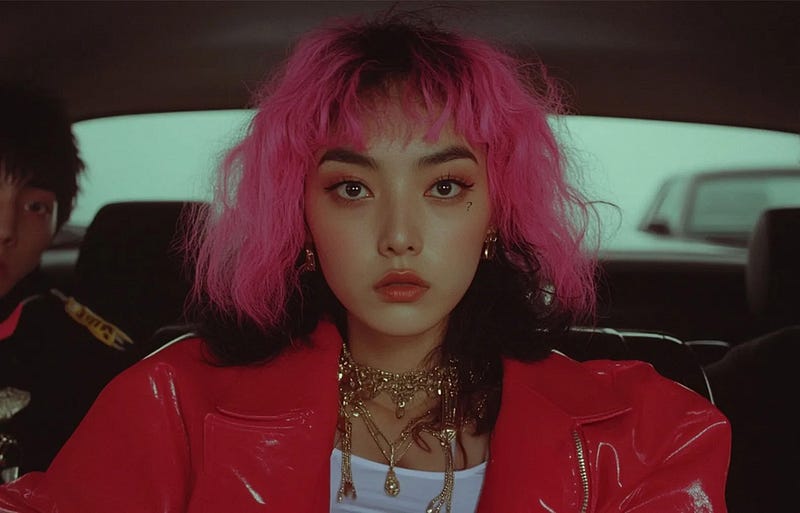
But rather than push back defensively, creators must take control by building systems that protect, tokenize, and monetize their originality.
Securing the foundation of authenticity
AI can reproduce sound, but not meaning. Authentic expression is born from lived experience, cultural depth, and emotional truth. Creativity must be treated as infrastructure — structured, secure, and valuable — not as fodder for algorithms.
Technology as cultural armor
The same surveillance tools used by platforms to map user behavior can also be used to defend artistic integrity. Technologies such as zero-knowledge proofs and quantum watermarks enable rights verification without compromising privacy. These aren’t distant innovations — they are immediate solutions for scalable, human-centered protection.
Turning copyright into capital
Legacy copyright systems serve as outdated referees in a rapidly evolving landscape. What’s needed is a marketplace — transparent, liquid, and fair. By reclassifying copyrights as financial assets, we open new paths for investment and give creators true ownership. Infrastructure isn’t only technical; it determines who prospers.
Build the system, own the outcome.
Zuckerberg didn’t just build a better product — he bought the road everyone else has to use. Creators must do the same. The future won’t be shaped by those who navigate the old terrain, but by those who lay down new tracks.
In the age of AI, protecting human creativity is not just an artistic imperative — it’s a strategic advantage.
The great creative industry transformation
The creative industry stands at an unprecedented crossroads. On one side, we witness the emergence of AI-generated pop stars, such as TaTa, created entirely through artificial intelligence platforms.
On the other hand, we see innovative companies building new financial infrastructure that treats copyrights as tradable assets worth trillions. These seemingly separate developments are, in fact, two sides of the same transformative coin — and understanding their connection reveals the path forward for creators, investors, and the industry as a whole.
When disruption meets opportunity
The statistics tell a compelling story of an industry in flux. The global digital creative economy is projected to reach $7.35 trillion by 2030, while the royalty market alone is expected to represent approximately $2 trillion in value. Yet this massive economic engine loses an estimated $53 billion annually in music alone to unauthorized use and inefficient allocation systems. Meanwhile, music piracy affects 65% of internet users, with illegal downloads accounting for 40% of worldwide consumption.
These challenges have created a fascinating paradox. Traditional institutions, originally designed to protect creators, often become sources of frustration and inefficiency. Artists find themselves navigating bureaucratic labyrinths where administrative oversight overshadows creative support. This environment breeds what researchers call “learned helplessness” — the belief that individual actions cannot meaningfully impact outcomes.
However, disruption creates opportunity. When existing systems fail to serve their intended purpose, space opens for entirely new approaches that don’t just solve problems better — they solve different problems altogether.
The technology convergence is reshaping creativity.
The transformation happening today isn’t just about artificial intelligence replacing human creativity — it’s about technology creating new possibilities for how creative value is created, protected, and exchanged. Advanced AI analysis, quantum computing capabilities, and blockchain infrastructure are converging to build systems that previous generations of creators could never have imagined.
Consider the sophistication now possible in copyright protection. Quantum watermarks provide superior security compared to traditional measures, while zero-knowledge proofs enable ownership verification without compromising sensitive information. These aren’t theoretical concepts — they’re practical tools already being deployed to monitor and protect creative works across hundreds of digital platforms.
Similarly, the emergence of AI artists like TaTa represents more than a novelty in the entertainment industry. It demonstrates how technology can create controllable intellectual property that addresses real business challenges around consistency, scandal management, and content production efficiency. The question isn’t whether this technology will advance — it’s how the industry adapts to leverage these capabilities while preserving what makes human creativity irreplaceable.
Building new playing fields instead of fighting old battles
Perhaps the most significant parallel between current developments is the recognition that incremental improvements to broken systems often prove less effective than building entirely new infrastructure. When traditional rights organizations operate with outdated processes and conflicting priorities, forward-thinking companies respond by creating platforms that operate with 82–89% gross margins through AI-powered automation.
This approach transforms static copyrights into programmable, yield-bearing financial instruments. Through innovative regulatory frameworks, companies are pioneering methods for creating synthetic shares that represent fractional claims on future royalty income. This creates unprecedented liquidity in historically illiquid markets, enabling transactions to be settled in days instead of months.
The maturation of private markets into a $13 trillion segment provides the capital foundation for this transformation. Private investment is no longer an alternative funding source — it’s the essential force scaling the copyright infrastructure that bridges gaps, preserves culture, and unlocks sustainable returns for investors.
Preserving human authenticity in an artificial age
The most crucial insight from examining these parallel developments is that the goal isn’t choosing between technology and human creativity — it’s using technology to amplify and protect authentic human expression. AI can analyze every song progression ever recorded and study mathematical relationships between emotion and melody. Still, it cannot experience the weight of mortality, the joy of unexpected connection, or the transformative power of lived experience.
The artists who created jazz despite extreme poverty, who transformed personal struggles into universal art, and who built communities through shared musical experiences — these represent something that algorithmic generation cannot replicate. Their stories emerge from the messy unpredictability of human existence, not from pattern recognition and mathematical optimization.
The path forward! Integration, not replacement
The future belongs to systems that recognize both the power of technological innovation and the irreplaceable value of human creativity. Advanced monitoring systems can protect artists’ rights while preserving space for authentic expression. Privacy-preserving technologies can verify ownership and detect infringement without compromising the privacy of either artists or audiences. Quantum-enhanced security can stay ahead of sophisticated infringement methods, while human-centered AI serves as a tool to enhance, rather than replace, human creativity.
This transformation requires abandoning the mindset of fighting for seats at broken tables and instead building new platforms designed for transparency, efficiency, and technology-driven value creation. When administrative surveillance and political maneuvering characterize existing institutions, the response isn’t to navigate those systems more effectively — it’s to create alternatives that render such dysfunction irrelevant.
From helplessness to optimism
The convergence of AI capabilities, blockchain infrastructure, and private capital represents more than technological advancement — it embodies a fundamental shift from learned helplessness to learned optimism. Instead of accepting that creative value will inevitably be lost to inefficiency and unauthorized use, innovators are building systems that enable choices and innovations to reshape outcomes fundamentally.
This new paradigm isn’t based on navigating bureaucracy or managing relationships with gatekeepers. It’s built on transparent, efficient value creation where the worth of creativity is unlocked for all participants — creators, investors, and markets themselves.
The creative industry’s transformation isn’t happening to us — it’s being built by visionaries who understand that when existing games become unwinnable, the solution isn’t playing them better. It’s owning the playing field entirely and writing rules that serve creativity, innovation, and authentic human expression.
The future doesn’t belong to those who adapt to broken systems. It belongs to those who build better ones and invite others to join them in creating something worthy of human creativity’s true potential.


