
Why Suno’s $2 K licensing spend suddenly looks like a legal land mine. And what the Warner Music deal means for every creator and copyright investor.
𝐒𝐜𝐡𝐫𝐨̈𝐝𝐢𝐧𝐠𝐞𝐫'𝐬 𝐅𝐫𝐚𝐮𝐝: 𝐖𝐡𝐞𝐧 𝐢𝐧𝐯𝐞𝐬𝐭𝐨𝐫𝐬 𝐝𝐢𝐬𝐜𝐨𝐯𝐞𝐫 𝐭𝐡𝐞𝐲 𝐛𝐨𝐮𝐠𝐡𝐭 𝐪𝐮𝐚𝐧𝐭𝐮𝐦 𝐮𝐧𝐜𝐞𝐫𝐭𝐚𝐢𝐧𝐭𝐲 𝐬𝐨𝐥𝐝 𝐚𝐬 𝐜𝐞𝐫𝐭𝐚𝐢𝐧𝐭𝐲... Billboard's found that "Suno Creates an Entire Spotify Catalog’s Worth of Music Every Two Weeks, Says Investor Pitch Deck for $250M Fundraise."

Loading...
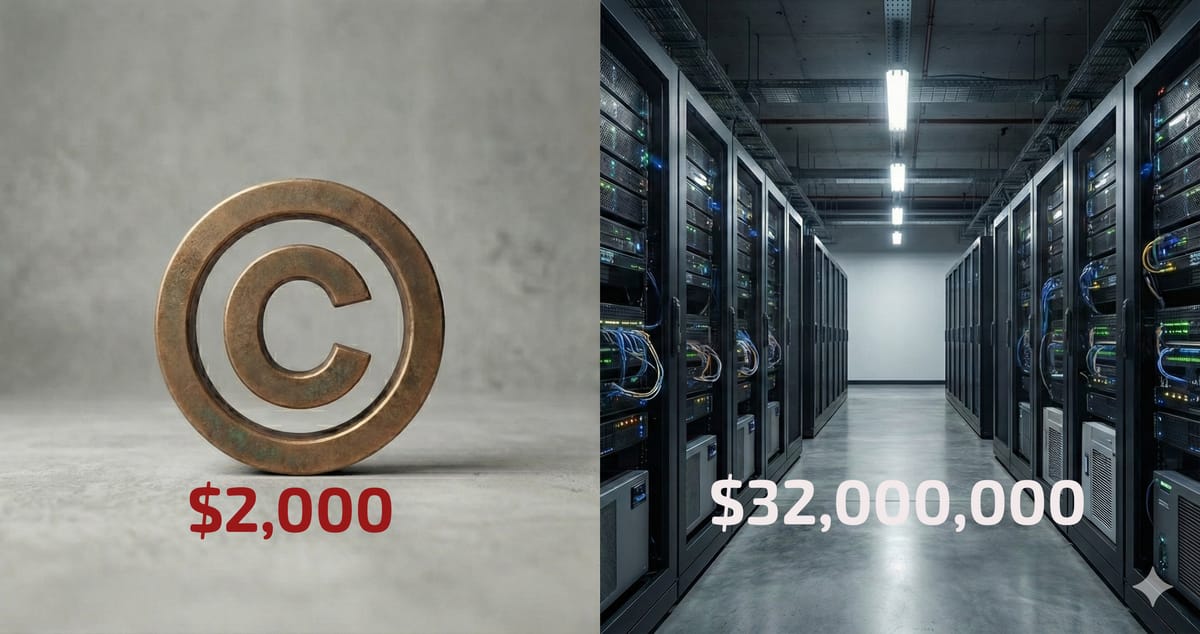
Verify on BlockchainBillboard just disclosed that Suno poured $32 million into computing and only $2 000 into music licences – a 16,000:1 spend ratio that looked harmless under ordinary copyright‑infringement risk.
Suno sold investors an AI company. What they actually bought was a quantum superposition, a business model that's simultaneously a legal innovation and criminal IP theft until a court potentially collapses it into one state or the other.
The evidence? $32 million on servers. $2,000 on licensing. Ratio: 16,000:1.
The two states presented as one.
You can't sell Schrödinger's cat as a guaranteed live pet.
Yet the regulatory landscape has shifted dramatically, and that tiny licence budget now sits at the centre of potential securities fraud exposure.
The legal pivot you need to know
In July 2022, Wyoming passed legislation (Series LLC statutes and a blockchain filing amendment) that allows a copyright to be held within a corporate wrapper. The wrapper can issue tokenised securities, ERC20-style tokens that promise dividend-like payouts from future royalty streams. The key nuance is that the token, not the underlying work, may be treated as a security under the Howey test.
Since then, Japan (Sept 2025), the EU’s MiCA framework, and Switzerland’s Digital‑Switzerland strategy have introduced parallel regimes for tokenised assets. All of these jurisdictions recognise that when a token is sold to investors, securities law duties (such as registration, disclosure, and anti-fraud safeguards) apply. The copyright itself remains subject to the traditional IP regime, including the fair‑use defence.
How does that change Suno’s risk profile?
Suno’s AI models were trained on works that, under Wyoming law, could be registered as securities if the company chose to issue royalty-share tokens. If Suno (or any AI music firm) sells those tokens without following securities laws, the activity could be considered securities fraud, which can lead to civil penalties and, in serious cases, criminal charges (up to 20 years in prison and multi-million-dollar fines).
A $2 000 licence payment does not automatically become a securities‑fraud violation; the trigger is the sale or offering of a security. What creates exposure is the absence of a compliant token‑offering framework when the underlying works are positioned as dividend-generating assets.
The Warner Music deal – a template for safety
Recognising this emerging risk, Suno negotiated a direct licensing agreement with Warner Music Group that dramatically expanded its royalty payment budget, from a few thousand dollars to $37.5 million earmarked for lawful data use.
The deal accomplishes three things that every creator-focused investor should watch:
- Explicit licence coverage for every piece of training data, eliminating any ambiguity about whether a tokenised work is being used without permission.
- Clear separation of regimes – the licence addresses copyright obligations, while any future token issuance will be handled through a compliant securities‑law process (registration, prospectus, KYC).
- Investor reassurance – institutional backers and insurers now have a documented compliance pathway, removing the “uninsurable‑risk” label that has plagued many AI‑music startups.
In short, the Warner deal is the playbook for avoiding future legal claims: secure robust licences first, then, if you want to monetise royalties via tokens, do it within a fully‑registered securities framework.
What this means for creators and copyright investors
- Creators can now demand that AI firms either obtain proper licences or offer tokenised royalty shares that comply with securities law. This gives you a tangible, enforceable claim to future cash flows, not just a vague promise of “fair use.”
- Investors gain a clearer risk profile. When a portfolio company tokenises copyrights, the security law compliance audit becomes a material due diligence item, reducing the risk of sudden regulatory shutdowns or criminal investigations.
- Both sides benefit from the transparency that blockchain registration provides: immutable ownership records, automated dividend distribution, and auditable proof of any unauthorised use.
Bottom line
The Wyoming Series LLC + blockchain model opens a powerful new avenue for monetising music rights, but it also creates a dual-layer legal obligation. Ignoring the securities‑law side can turn a modest licence fee into a liability that could lead tosuch as registration, disclosure, and criminal prosecution. Suno’s partnership with Warner Music shows how a proactive licensing strategy, paired with a compliant token‑issuance plan, can safeguard both creators and investors.
Suppose you’re building or investing in AI-driven music platforms, treat the Warner deal as the minimum compliance baseline: secure full licences now, and only then explore tokenised royalty securities under a regulated framework.
Stay ahead of the curve. Protect the art. Secure the capital.
(Disclaimer: This post is for informational purposes only and does not constitute legal advice. Consult qualified counsel for guidance tailored to your specific situation.)


